Jordan Weber · 5 September 2026
The Evolution of Organic Reach Tactics Among Independent Digital Creators
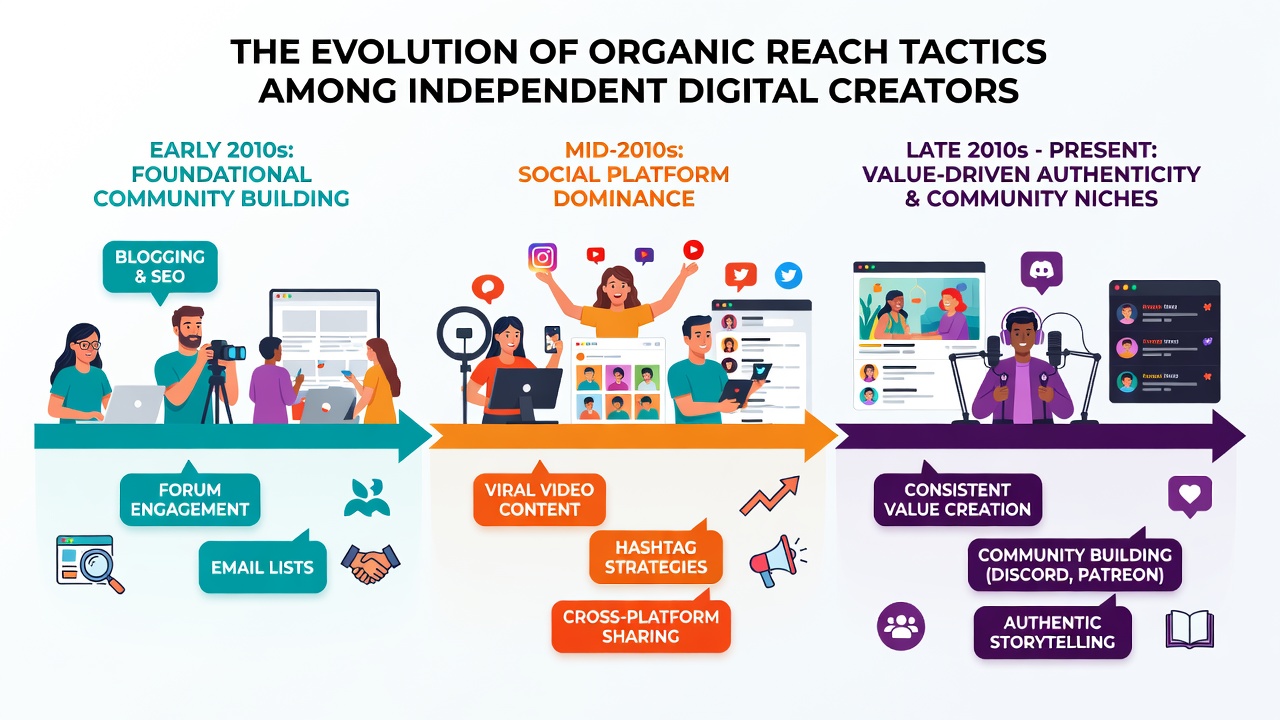
Independent digital creators have shifted their organic reach strategies across multiple platform eras, moving from basic keyword optimization in the early blogosphere to sophisticated community-driven distribution models by September 2026. Data from various industry reports show that these changes often followed major algorithm updates at major platforms, with creators adapting through experimentation rather than fixed playbooks.
Early Platform Dynamics and Content Distribution
Before widespread algorithmic feeds, creators relied on direct subscriptions and search visibility, building audiences through consistent posting schedules and basic SEO practices that prioritized keyword density and backlink acquisition. Researchers at academic institutions documented how independent sites in the mid-2000s achieved steady traffic by focusing on niche topics, while those who diversified across emerging networks like early Twitter and YouTube gained additional exposure through shares and embeds.
Platform policies during this period rewarded raw engagement metrics, so creators tested cross-promotion tactics such as guest posts and link exchanges that funneled readers between personal sites and social profiles. Figures from university studies indicate that email list integration became a common hedge against algorithm volatility, allowing direct audience contact without intermediary feeds.
Algorithm Shifts and Adaptation Patterns
Major platforms introduced ranking changes around 2015 that prioritized recency and interaction velocity, prompting creators to refine posting cadences and experiment with video formats that held viewer attention longer. Those who tracked performance data noticed drops in reach for static images and pivoted toward carousel posts or short clips that encouraged comments and saves.
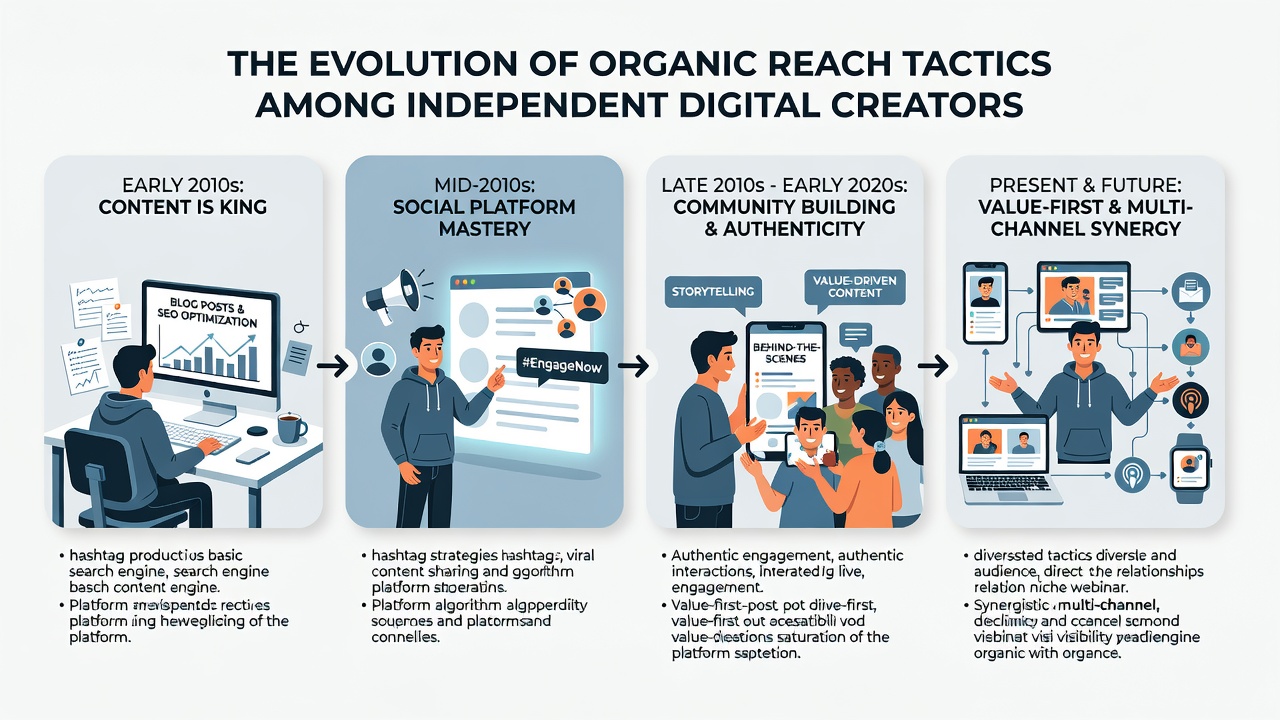
By the early 2020s, many independent creators incorporated Stories and live sessions into their routines because these formats delivered higher visibility within the same app ecosystems. Reports from research organizations across North America and Europe reveal that creators who maintained consistent visual branding across posts retained followers better during feed redesigns, while fragmented approaches led to audience fragmentation.
Community and Multi-Channel Approaches Through 2026
Independent creators increasingly layered tactics such as Discord servers and newsletter cross-references to reduce dependence on any single platform's distribution rules. In September 2026, updates to certain recommendation systems further emphasized original commentary over reposted material, leading practitioners to double down on unique formats like threaded analyses and collaborative threads that invited participation.
Industry data collected by trade associations shows measurable differences in retention rates when creators combined platform-native tools with off-platform hubs such as personal websites and private communities. Observers note that geographic variations appeared as well, with creators in regions outside major English-speaking markets adapting similar patterns but tailoring them to local language preferences and payment integrations for supporter tiers.
Academic papers published in recent years highlight how A/B testing of captions and timing became standard practice among those managing multiple accounts, allowing data-driven adjustments without paid promotion. Creators who coordinated release schedules across platforms often saw compounded discovery effects, particularly when one post linked to deeper content hosted elsewhere.
Conclusion
The progression of organic reach methods among independent digital creators reflects ongoing responses to platform policy adjustments and metric shifts documented through 2026. Patterns observed in performance data and case analyses demonstrate that diversification across owned channels and community features has emerged as a recurring response to centralized feed changes. External sources such as Pew Research Center reports on social media usage and studies from the OECD digital economy outlook provide additional context on these broader trends without prescribing specific creator actions.